Facility A
One side of the shipping workflow.
Operational continuity / project 03
The Dirk GOHL server project.
Interactive AI for understanding, monitoring and troubleshooting a custom shipping workflow between two facilities.
Understand the code. Support the operation.
When a lead developer left unexpectedly, important knowledge of a custom shipping system was no longer readily available. Supporting the operation meant rebuilding an understanding of the code, its behavior and the process it connected.
System context / generalized 3PL workflow
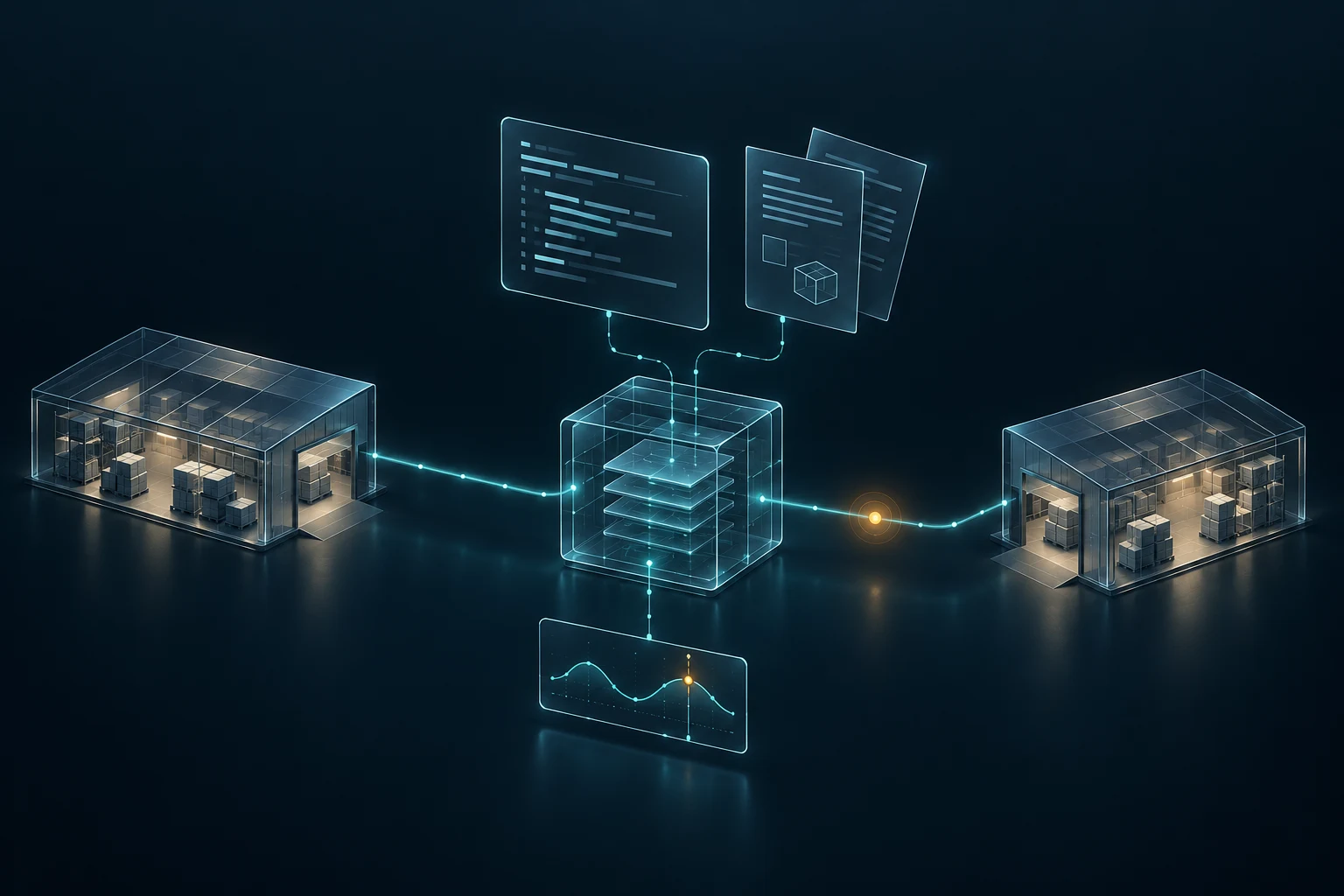
The project supports a third-party logistics (3PL) shipping workflow spanning two facilities. Dirk helps connect the business question: where did the process stop? The answer points to the software that handles the work.
One side of the shipping workflow.
The code and processing steps connecting the operational handoff.
The connected side of the workflow.
AI support layer
Interactive troubleshooting brings code understanding, runtime observations and documentation into the same investigation. The operator can ask about a symptom, explore the relevant logic and work toward the next useful check.
Conceptual relationship only. Facility labels, process descriptions and artwork are generalized; this is not a deployment map or an integration specification.
Meet Dirk / interactive AI
Dirk is the AI I use to troubleshoot the custom shipping process. The interaction lets me move between an operational symptom, the relevant code and observations about what is running.
The value is in asking follow-up questions: what should happen next, what evidence shows that it happened, and which part of the workflow needs closer attention?
Start with the last known completed step. Use the code and available runtime evidence to narrow the investigation to the next handoff instead of treating the entire system as one unknown.
Ask Dirk to explain a component’s purpose, how it relates to surrounding code and which assumptions need to be checked. Carry useful explanations into the documentation.
Compare what the documentation describes with what is observed while the system runs. A mismatch becomes a focused question to investigate and a reason to review the relevant documentation.
Knowledge recovery
The documentation effort addresses the full codebase: what each part does, how the pieces relate and how they support the shipping process. Dirk assists with explaining the code and building documentation from that understanding.
The aim is to move critical knowledge out of individual memory and into material another person can inspect, question and use.
Full-codebase documentation is the scope of the work; this case study does not claim a measured percentage of completed coverage.
Establish which code components belong to the process and what responsibilities they appear to carry.
Explain the relationships between processing steps and the handoffs that connect them.
Translate code behavior into component descriptions, workflow notes and troubleshooting guidance.
Use operational observations to question assumptions and refine the understanding recorded in the documentation.
Monitoring the running code
Dirk also supports monitoring the running code. That connects the static view of the source with the operational question of what the system is doing during a shipping process.
What does the code indicate should happen at this stage, and which processing step should follow?
What do the available runtime observations show about progress, interruptions or unexpected behavior?
Where do expectation and observation diverge, and what additional evidence would help explain the difference?
Monitoring is described at the capability level. Collection methods, schedules and production implementation details are intentionally omitted.
Skills behind the work

Reading unfamiliar code and reconstructing how components contribute to the shipping process.

Connecting software behavior to the handoffs between facilities in a third-party logistics workflow.

Using Dirk to explore symptoms, ask follow-up questions and work through the next investigation step.

Turning code understanding and troubleshooting findings into reusable explanations and support knowledge.
This case study focuses on investigation and knowledge recovery. It does not claim autonomous production repair, shipment changes or a quantified improvement in reliability.
Why this work matters
Reconstruct the relationship between the code and the shipping process when historical knowledge is missing.
Give the operator an interactive way to work from a business symptom toward a technical question.
Build documentation that supports future troubleshooting, maintenance and knowledge transfer.